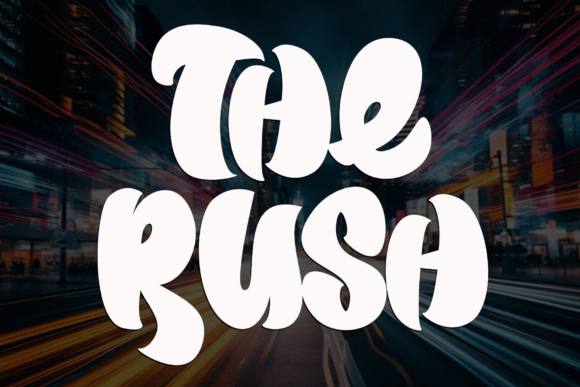
The Rush: A Modern Display Font for Versatile Design Needs
Typography plays a crucial role in shaping how audiences perceive visual content. The Rush is a display font designed with a balance of simplicity and warmth, making it a compelling choice for designers seeking a modern, approachable aesthetic. It blends clean structure with subtle organic touches, offering a polished interpretation of handwritten style without sacrificing readability or professionalism.
Understanding The Rush: Design Elements and Aesthetic Appeal
The Rush stands out due to its combination of crisp lines and gently rounded edges. These design choices contribute to a sense of friendliness and accessibility while maintaining a level of refinement. Unlike more decorative or script-heavy fonts, The Rush avoids excessive flourishes, instead opting for a streamlined, modern appearance that works well across both print and digital mediums.
Its balanced letterforms ensure legibility at various sizes, and the font's open spacing supports clarity in headlines and branding materials. This makes it especially effective in contexts where a human touch is desired without compromising on structure or formality.
How The Rush Compares to Similar Font Styles
In the category of modern handwritten or casual display fonts, several alternatives exist, each with its own personality and use case. Some fonts lean more heavily into the handwritten aesthetic, featuring uneven baselines or variable stroke weights that mimic actual penmanship. Others take a minimalist approach, focusing on geometric precision and stark simplicity.
The Rush sits comfortably between these extremes. It avoids the irregularity that can sometimes hinder readability in more expressive fonts, while still offering enough warmth to distinguish it from sterile, ultra-modern typefaces. This middle-ground positioning makes it versatile, especially for designers who want to convey approachability without sacrificing polish.
Strengths That Make The Rush a Practical Choice
One of the main strengths of The Rush is its adaptability. It works well in branding projects, particularly for businesses that aim to project a friendly, trustworthy image. It's also effective in packaging design, where legibility and visual appeal are both important. In digital content—such as website headers or social media graphics—The Rush brings a sense of warmth and modernity that can enhance user engagement.
- Clarity at a glance: Its open letterforms and consistent spacing help ensure readability even at a distance or in smaller sizes.
- Warm yet professional: Balances a casual tone with a clean finish, making it suitable for a broad audience.
- Consistent character: Maintains visual harmony across different weights and sizes, supporting cohesive design systems.
Tradeoffs and Limitations to Consider
While The Rush offers many benefits, it’s important to consider its limitations in specific contexts. For long-form body text or extended reading environments, it may not be the best choice. Display fonts like The Rush are typically optimized for headlines and short bursts of text rather than paragraph-length content.
Additionally, while its rounded edges contribute to its friendly appearance, they may not suit projects that require a more formal or rigid tone. Designers aiming for a stark, industrial, or highly structured aesthetic may find that The Rush’s softness doesn’t align with their goals.
When The Rush Is the Right Choice
The Rush excels in situations where a warm, inviting tone is desired without veering into overly casual territory. It’s particularly well-suited for:
- Brand identities: Especially for lifestyle, wellness, food, or creative businesses that want to feel approachable yet professional.
- Marketing materials: From digital ads to packaging labels, The Rush enhances visual appeal without compromising readability.
- Web and app interfaces: As a headline or call-to-action font, it contributes to a clean, user-friendly experience.
If your project requires a font that feels contemporary, legible, and just a bit personable, The Rush is worth considering.
When You Might Choose a Different Font
There are scenarios where a different font might better align with your design goals. If you're working on a technical document, formal publication, or interface requiring a high level of precision and neutrality, a more traditional sans-serif or serif font may be more appropriate.
Similarly, if your brand leans toward bold, edgy, or minimalist aesthetics, you may prefer a font with sharper angles or a more restrained structure. In such cases, The Rush’s rounded, approachable style might not convey the intended tone effectively.
Practical Comparisons: Real-World Applications
Imagine a local coffee shop rebranding its packaging and website. Using The Rush for product labels and headlines would help create a welcoming, artisanal feel. Its clarity ensures that key information like flavor names or brewing instructions remain easy to read, while its friendly character reinforces the brand's community-oriented image.
Contrast that with a legal services firm aiming for a strong, authoritative presence. In that case, a more structured, traditional font would better reflect professionalism and reliability. The Rush, while visually appealing, wouldn’t align with the firm’s need for a serious, formal tone.
Making an Informed Decision
Choosing a font involves more than just personal preference—it’s about matching the typeface to the message, audience, and medium. The Rush offers a compelling combination of clarity, warmth, and modernity, making it a strong contender for a variety of design applications.
Before making a final decision, consider testing The Rush in your intended context. See how it performs at different sizes, in different color schemes, and alongside other design elements. Compare it with alternative fonts to evaluate how well it supports your overall vision.
In the end, the right font is one that enhances your message rather than distracts from it. Whether The Rush becomes your go-to choice or simply one of several strong options, understanding its strengths and limitations will help guide your design decisions with confidence.