Funky Hollow: A Practical Guide to Implementing Retro Typography in Design Workflows
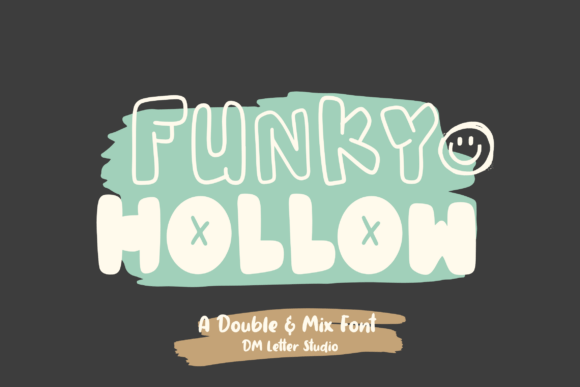
In the landscape of digital and print design, typography often serves as the primary vehicle for establishing brand voice and visual hierarchy. For professionals ranging from freelance graphic designers to marketing directors at established firms, selecting the right typeface is not merely an aesthetic choice; it is a strategic decision that influences user engagement and brand perception. Funky Hollow has emerged as a distinctive solution for projects requiring a bold, retro-inspired identity. Unlike standard sans-serif or serif fonts that blend into the background, this display font demands attention through its unique double-line outlines and playful mix-and-match styling. Integrating Funky Hollow into a creative workflow requires a clear understanding of its structural characteristics, technical limitations, and optimal use cases within broader design processes.
Understanding the Structural Mechanics of Funky Hollow
Before incorporating any new asset into a project pipeline, it is essential to analyze its fundamental properties. Funky Hollow is defined by its quirky and eye-catching nature, utilizing a double-line outline technique that creates depth without relying on heavy shading or complex gradients. This construction allows the font to maintain legibility even when scaled down, provided the context supports a display role. The "mix-and-match" aspect of the font refers to its ability to layer different stylistic elements, offering creators the flexibility to generate vibrant effects that static typefaces cannot achieve.
From a technical standpoint, the font's groovy look stems from its geometric irregularities. These are intentional deviations from perfect alignment, designed to evoke a sense of movement and energy. When planning a layout, designers must account for these variations. Unlike rigid grid-based typography, Funky Hollow thrives in environments where organic flow is prioritized. Understanding this mechanical behavior is the first step in effective implementation. It dictates how the font interacts with negative space, surrounding imagery, and other typographic elements within a composition.
Strategic Integration into Pre-Production Planning
The decision to use Funky Hollow should occur during the conceptual phase of a project, well before the execution begins. In the pre-production stage, teams define the target audience, brand guidelines, and visual mood boards. This font fits naturally into workflows for streetwear branding, poster design, and creative packaging where a retro or vintage aesthetic is a core requirement. During this planning phase, stakeholders should evaluate whether the brand personality aligns with the "funky" and energetic vibe the font conveys.
For entrepreneurs and small business owners launching a new product line, the selection process involves cross-referencing the font with existing brand assets. If the current logo utilizes clean, minimalist lines, introducing Funky Hollow might create dissonance unless used strictly for promotional materials rather than core identity. Conversely, for brands aiming to reinvigorate their image or appeal to a younger demographic aged 20–35, this typeface offers a direct pathway to visual modernization. The planning stage also involves checking licensing terms and ensuring compatibility with the software stack currently in use, such as Adobe Illustrator, Photoshop, or web-based design tools like Figma.
Execution Techniques for Maximum Impact
Once the decision is made to proceed, the execution phase focuses on how Funky Hollow is applied within the actual design files. The most effective method leverages the font's double-line capability. By using the font as a solid headline, designers can create immediate focal points that guide the viewer's eye. However, the true potential of the font is unlocked when layering the mixed style. This technique involves overlaying different weights or color variations of the same text to create a dynamic, three-dimensional effect.
In practical application, this works exceptionally well for posters and event flyers. The process typically involves setting the base text in a neutral color, then duplicating the layer and offsetting it slightly to reveal the hollow outline. This creates a shadow-like effect that adds depth without clutter. For streetwear branding, the font can be applied to garment mockups, where the bold strokes translate well onto fabric textures. Marketers should note that while the font is visually loud, it requires careful spacing. Kerning adjustments are often necessary to prevent the double lines from colliding, which can compromise readability at smaller sizes.
Workflow Optimization and Tool Compatibility
Efficiency in a professional workflow depends on how smoothly new assets integrate with existing tools. Funky Hollow is compatible with major vector and raster graphics platforms, but its unique structure requires specific handling to maintain quality across different media. When preparing files for print, particularly for packaging, it is crucial to convert text to outlines early in the process to ensure the double-line details render correctly on press. This prevents font substitution errors that could alter the intended groovy aesthetic.
For digital projects, such as social media campaigns or website headers, the font's file size and loading performance must be considered. Web developers should utilize variable font formats or optimized SVG exports if the font supports them, ensuring fast load times without sacrificing visual fidelity. Collaboration between designers and developers is key here; providing clear style guides that specify how Funky Hollow should be used—such as limiting its use to H1 tags or specific call-to-action buttons—ensures consistency across all touchpoints. This organizational step prevents the font from being overused, which can dilute its impact and make the overall design feel chaotic.
Quality Control and Long-Term Brand Consistency
Maintaining quality control is vital when implementing a highly stylized font like Funky Hollow. Because the font is so distinctive, there is a risk of it overpowering other content if not managed correctly. Regular reviews during the production cycle should focus on contrast and hierarchy. Does the headline stand out too much against the body copy? Is the mix-and-match styling creating visual noise? These questions help refine the final output. Establishing a set of rules regarding color palettes and pairing fonts can streamline this process. For instance, pairing Funky Hollow with a simple, neutral sans-serif for body text creates a balanced composition that allows the display font to shine without overwhelming the reader.
Long-term use requires monitoring trends and audience reception. While the retro-inspired look of the font is timeless in many contexts, the specific application may need adjustment as design trends evolve. Businesses should periodically audit their visual assets to ensure the font still aligns with current brand goals. If a brand pivots towards a more corporate or serious tone, Funky Hollow may need to be retired or reserved for specific seasonal campaigns. This adaptability ensures that the brand remains relevant while leveraging the visual energy the font provides.
Practical Implementation Scenarios
To illustrate the versatility of Funky Hollow, consider several real-world scenarios where it enhances the creative process:
- Streetwear Launches: Designers can use the font for limited-edition t-shirt graphics, utilizing the hollow outline to create a stencil-like effect that resonates with urban culture.
- Creative Packaging: Small food and beverage brands can apply the font to labels, using the mix-and-match layers to highlight flavor profiles or ingredients in a fun, approachable way.
- Event Promotion: Event organizers can leverage the bold look for concert posters, ensuring the event name captures attention in crowded digital feeds and physical bulletin boards.
- Digital Content: Bloggers and content creators can use the font for YouTube thumbnails or Instagram story headers to break the monotony of standard text overlays.
Each of these scenarios benefits from the font's ability to inject personality into functional designs. The key is to treat Funky Hollow as a specialized tool rather than a default option. By reserving it for high-impact moments, creators maximize its effectiveness and maintain a cohesive visual language.
Final Considerations for Adoption
Adopting Funky Hollow into a professional toolkit is a strategic move that can elevate the quality of retro-inspired and energetic design projects. Its success lies not just in its unique appearance but in how it is integrated into the broader workflow. From initial concept planning to final quality assurance, every stage of the process offers opportunities to optimize the font's usage. By respecting its structural quirks, ensuring technical compatibility, and maintaining strict quality controls, designers and marketers can harness the full potential of this quirky display font. Ultimately, Funky Hollow serves as a powerful asset for those looking to bring visual energy and distinct personality to their work, provided it is implemented with intention and precision.