Gridiron: A Sport-Inspired Typeface Built for Impact and Identity
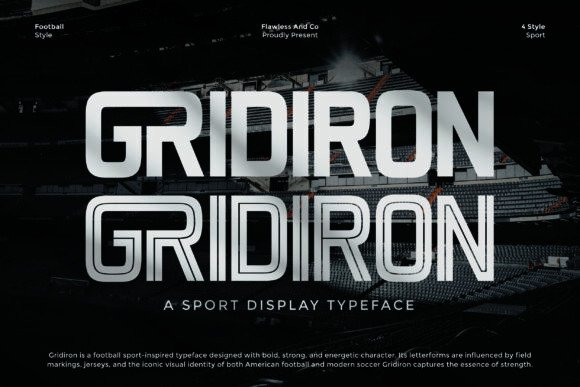
When it comes to visual communication in sports branding, the choice of typography plays a crucial role in conveying energy, strength, and team identity. Gridiron, a display typeface inspired by the bold aesthetics of football culture, stands out for its commanding presence and athletic character. Designed to capture the intensity of competition, Gridiron blends elements from football fields, jersey lettering, and modern sports design into a cohesive and versatile type solution.
What Sets Gridiron Apart
Gridiron is not just another bold typeface. It’s engineered with a distinct visual language that echoes the physicality and dynamism of gridiron sports. The letterforms are structured with sharp angles, reinforced strokes, and high contrast—features commonly found in stadium signage and athletic apparel. This deliberate design approach gives Gridiron a strong visual identity that commands attention without sacrificing legibility.
One of its key features is PUA encoding, which ensures that users have seamless access to all glyphs, alternate characters, and swash variants. This flexibility allows designers to tailor typographic treatments for logos, headlines, and merchandise without needing advanced software or workarounds. For projects where customization and visual impact are top priorities, Gridiron offers a level of control that many similar fonts lack.
Comparing Gridiron to Other Sport-Inspired Fonts
There are many bold, athletic typefaces available, ranging from vintage-inspired block letters to sleek, modern sans-serifs. Gridiron occupies a middle ground—neither purely retro nor entirely futuristic. Its design draws from contemporary sports branding, making it well-suited for modern athletic identities rather than nostalgic or historical themes.
Compared to more generic bold sans-serif fonts, Gridiron’s letterforms are more stylized and expressive. This makes it ideal for applications where visual punch matters, such as event posters, team branding, or merchandise design. However, that same expressive quality can be a drawback in contexts requiring subtlety or readability at smaller sizes. In such cases, a cleaner, more neutral typeface may be more appropriate.
Unlike some sport-themed fonts that lean heavily into stencil or distressed effects, Gridiron maintains a polished, intentional look. This makes it more adaptable across media, from digital displays to printed materials. It avoids the overused "vintage" aesthetic that can feel cliché, offering instead a fresh take on athletic typography.
Strengths and Tradeoffs
Gridiron’s primary strength lies in its ability to convey strength and determination through its design. The typeface works exceptionally well in high-impact scenarios where visual dominance is key. Its structure lends itself naturally to headlines, logos, and promotional materials where the goal is to stand out and communicate energy.
- High visual impact for headlines and branding
- PUA encoding provides easy access to extended characters
- Modern athletic aesthetic that avoids overused styles
- Versatile across digital and print formats
However, like any specialized typeface, Gridiron has its limitations. It’s not intended for long-form text or interface design, where clarity and neutrality are more important. Attempting to use Gridiron in body copy or user interface elements may result in reduced readability and visual fatigue.
Additionally, while its stylistic flourishes add character, they may not align with every brand identity. Designers working on projects with a minimalist or corporate tone may find Gridiron too aggressive or stylized. In such cases, a more restrained typeface would better serve the design goals.
Best-Use Scenarios
Gridiron shines in applications where the message needs to resonate with strength, competition, and team spirit. Some of the most effective uses include:
- Sports team logos – Gridiron’s bold structure and athletic roots make it ideal for creating memorable team identities.
- Event branding – Whether for tournaments, marathons, or youth leagues, Gridiron helps create energetic promotional materials.
- Mechandise design – From t-shirts to caps, the font’s high contrast and clean lines translate well to product design.
- Editorial headlines – In sports publications or event programs, Gridiron can elevate the visual hierarchy and tone.
Its design also lends itself well to animated or motion graphics, where dynamic typography enhances the viewer’s emotional response. In digital marketing, for example, headlines set in Gridiron can reinforce themes of strength and determination, aligning with messaging around performance and perseverance.
When to Consider Alternatives
Despite its strengths, there are situations where Gridiron may not be the best choice. If a project requires a more neutral tone or needs to maintain readability across various sizes and formats, a simpler, more versatile typeface might be more effective. Additionally, for historical or retro-themed branding, fonts with a more traditional or distressed aesthetic could be a better fit.
Designers should also consider the broader typographic system they are working within. Gridiron works best when paired with complementary fonts that provide contrast and balance. Using it in isolation without supporting typefaces can lead to a visually overwhelming design.
Finally, for international projects or multilingual content, it’s important to verify that Gridiron supports the required character sets. While PUA encoding enhances glyph access, it does not always guarantee full language support, which could limit its usability in certain global contexts.
Making an Informed Decision
Choosing the right typeface is more than just selecting something that looks good—it’s about aligning visual style with purpose, tone, and audience. Gridiron offers a compelling option for designers seeking a sport-inspired typeface that conveys strength, energy, and modernity. Its combination of bold design, customization options, and athletic identity makes it a strong contender in the realm of sports typography.
However, like any design tool, its effectiveness depends on how well it fits the specific needs of the project. By evaluating factors such as intended use, target audience, brand personality, and technical requirements, designers can determine whether Gridiron is the right choice—or if another option might better serve their goals. Understanding these nuances ensures that typographic choices enhance, rather than distract from, the overall message.